Countertops – What Actually Makes Sense for Your Space
There’s a moment in every kitchen or bathroom project where everything starts to feel the same. White samples, gray samples, something with veins, something without. And then someone asks, “What’s the actual difference?”—which is usually when things get interesting.
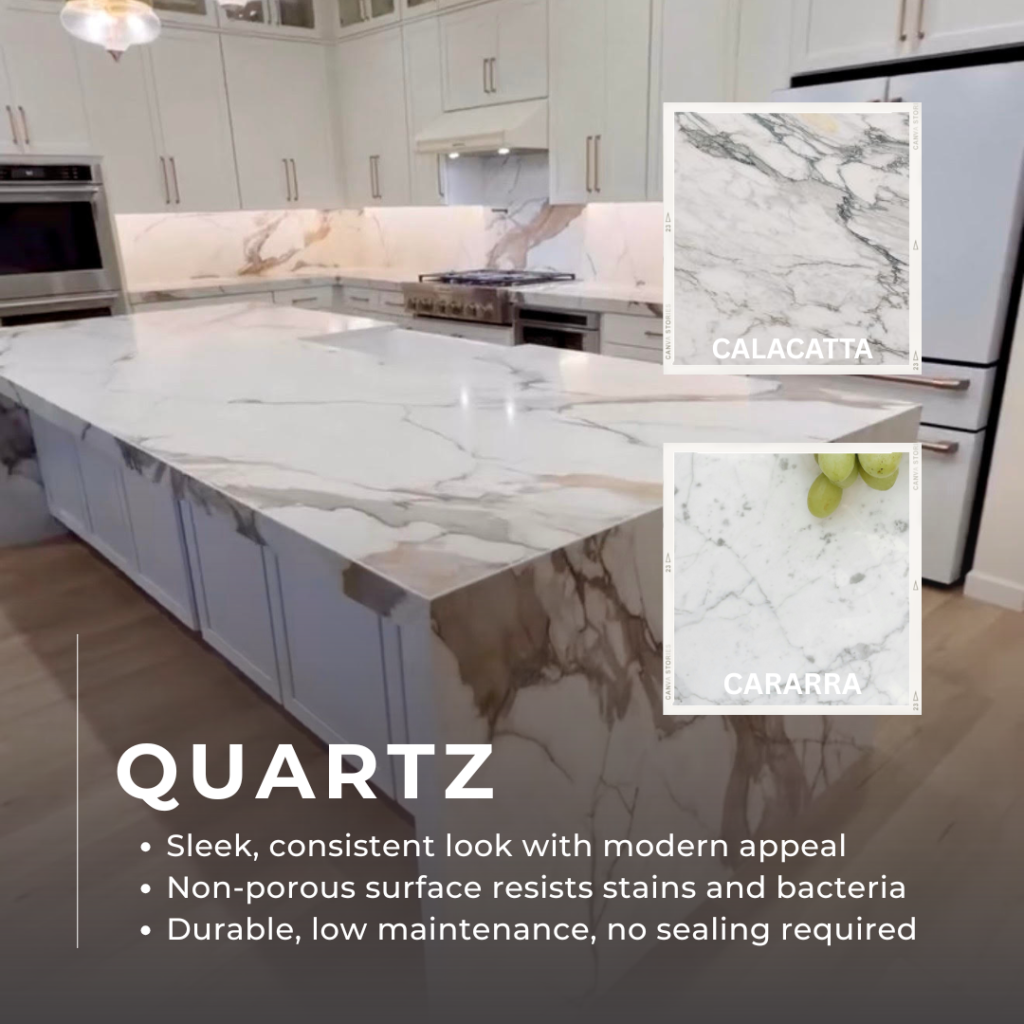
Quartz is where most people land first, and for good reason.
It’s engineered, so what you see is what you get—consistent color, predictable patterns, and zero drama when it comes to maintenance. No sealing, no guessing. It’s the surface that fits into real life without asking much in return.
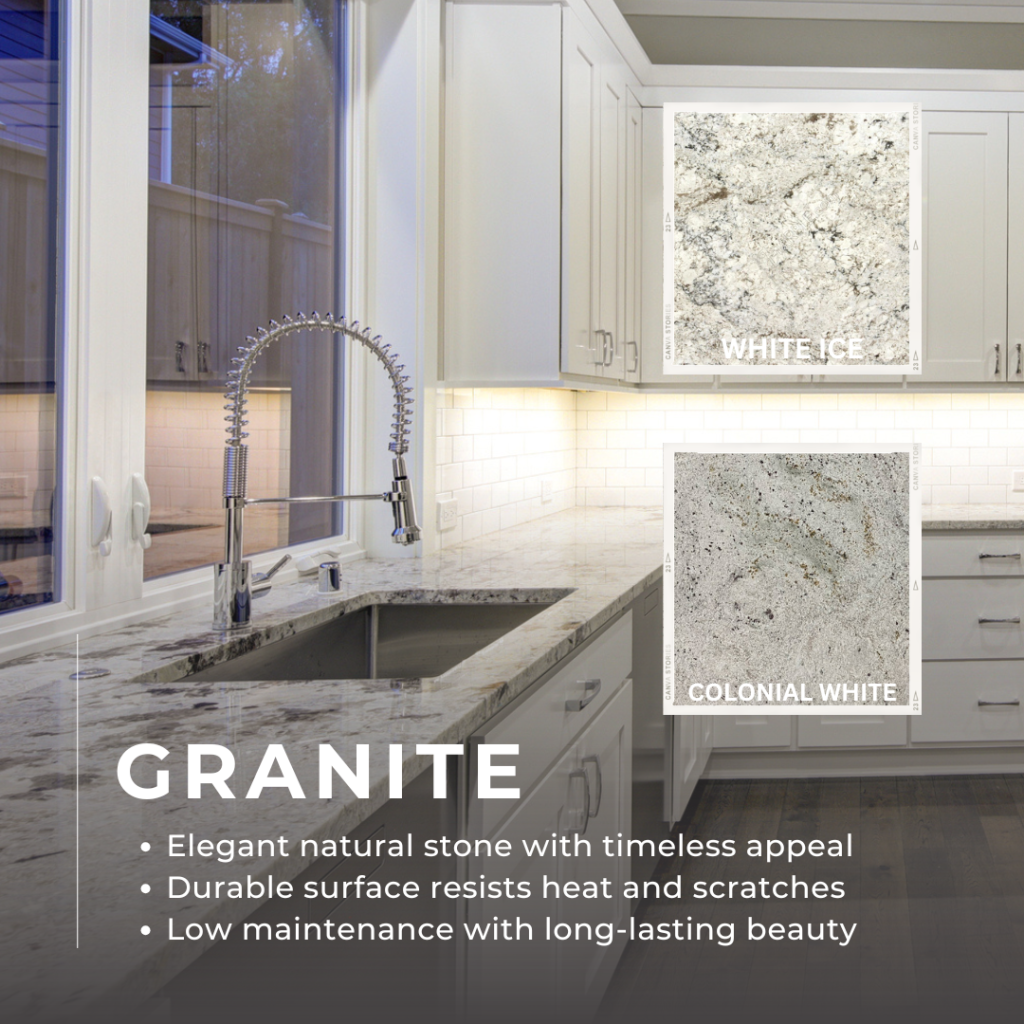
Granite feels different the second you touch it.
It’s colder, a little more alive, and no two slabs are ever identical. You get movement, depth, and that slightly unpredictable character that makes a kitchen feel less manufactured. It does ask for a bit more care—sealing now and then—but for a lot of homeowners, that’s a fair trade.
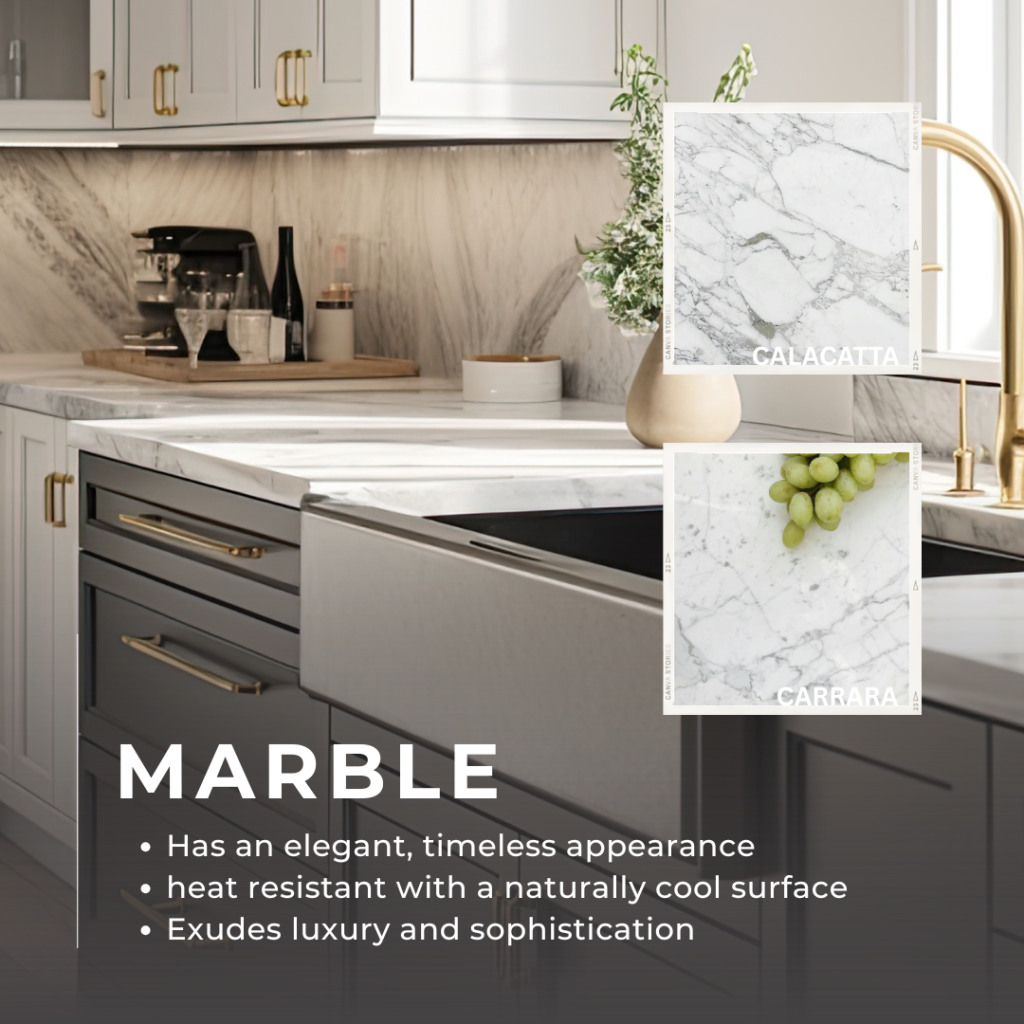
Marble is a different conversation entirely.
It’s softer, more porous, and yes, it will change over time. But that’s also the point. Marble doesn’t stay perfect—it develops a patina, picks up history, and ends up looking better in a way that polished surfaces can’t quite replicate. It’s not for everyone, but the people who love it really love it.
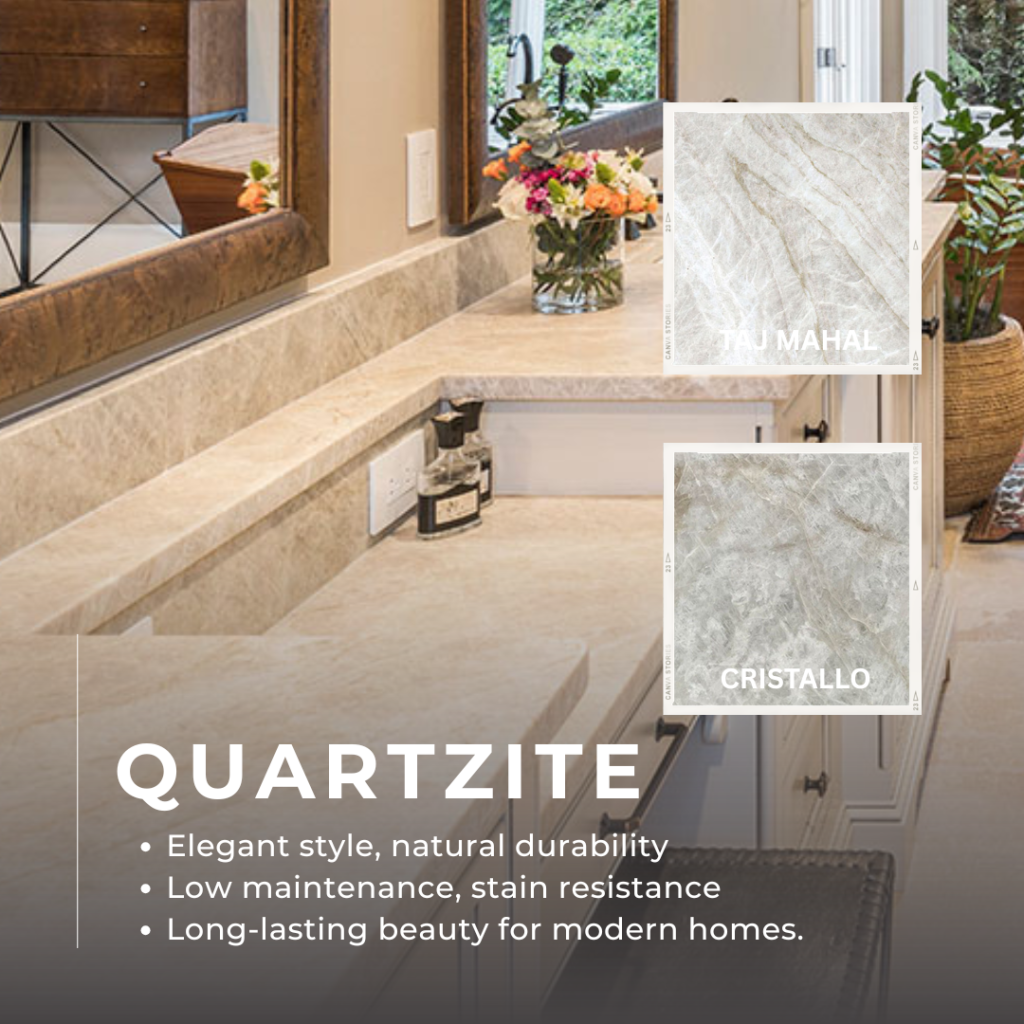
Quartzite tends to confuse people, mostly because it sounds like quartz but behaves more like granite—just tougher.
It’s natural stone, extremely durable, and often comes with dramatic veining that feels closer to marble, without the same level of vulnerability. If you want something bold that can handle heavy use, this is usually where the conversation goes next.
And then there’s porcelain slabs, which have been quietly gaining ground.
They’re thinner, lighter, and surprisingly strong, with excellent resistance to heat, stains, and UV exposure. That makes them especially useful for large wall applications, outdoor kitchens, or anywhere you want a seamless look without thick edges. They’re a little different to fabricate, a little different to install—but when done right, they feel sharp and modern in a way that stands apart from traditional stone.
In the end, it’s less about which material is “best” and more about how you actually live.
Busy kitchens, low-maintenance priorities, statement pieces, or something that ages with you—each material leans in a slightly different direction. The trick isn’t picking what looks good in a showroom. It’s choosing what still makes sense a year from now, when it’s just part of your everyday routine.